
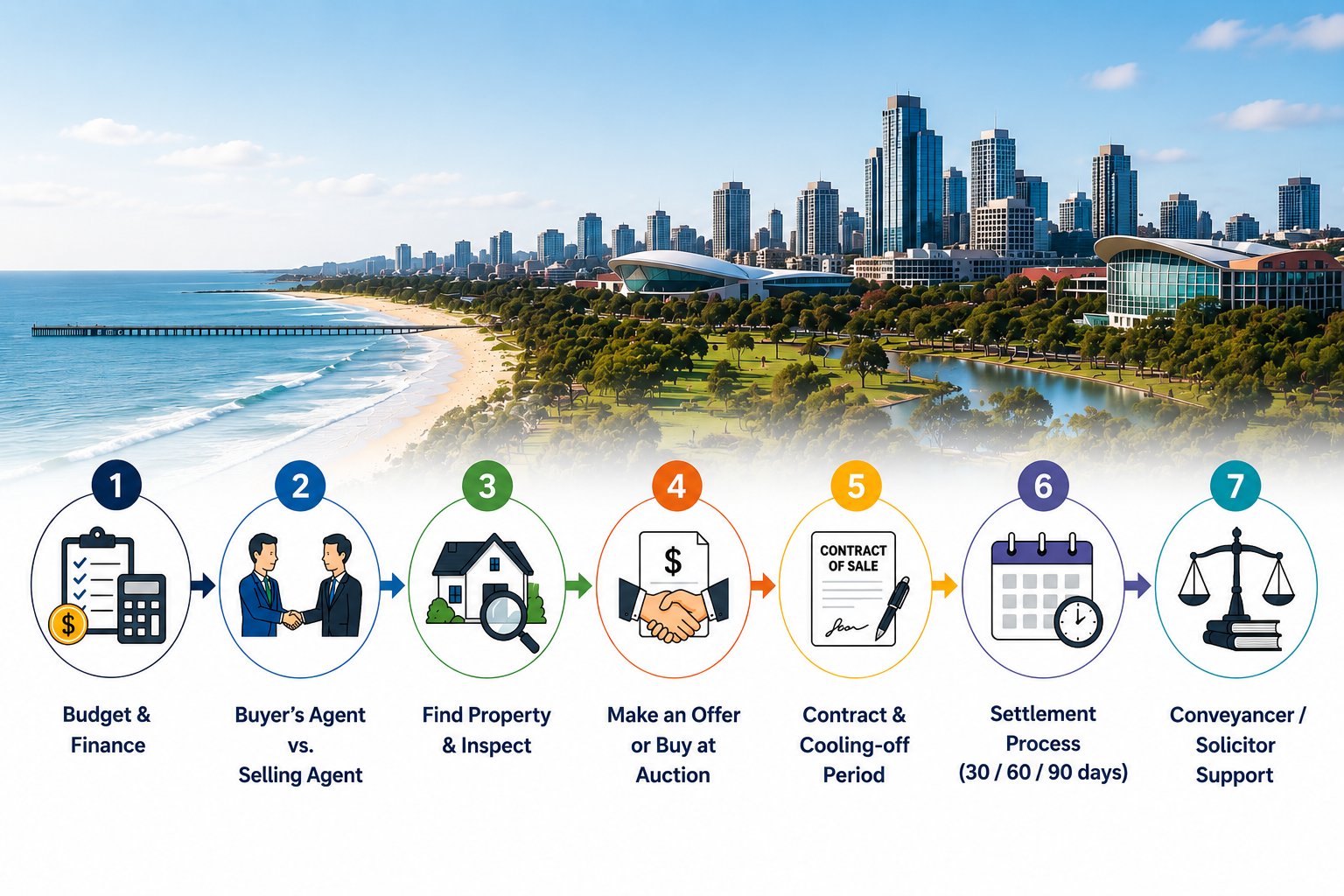
Purchasing a property is one of the biggest financial decisions most people will ever make. However, for many first-home buyers, the process can feel overwhelming and confusing.
Questions such as:
- Where do I start?
- Do I need a buyer’s agent?
- Should I buy at auction or make an offer?
- What is a cooling-off period?
- What happens between signing a contract and settlement?
are common concerns for anyone entering the Australian property market for the first time.
At NICH Real Estate, we have created this step-by-step guide to help you better understand the property buying journey in Australia.
Step 1: Understand Your Budget and Finance Options
Before you start inspecting properties, it is important to understand exactly how much you can afford.
Most buyers begin by obtaining a loan pre-approval from a lender or mortgage broker. This gives you a realistic budget range and demonstrates to sellers that you are a serious buyer.
In addition to the purchase price, buyers should also budget for:
- Stamp duty (where applicable)
- Conveyancing or legal fees
- Building and pest inspections
- Loan establishment costs
- Moving expenses
Having your finance organised early can significantly reduce stress during the buying process.
Step 2: Buyer’s Agent vs Selling Agent – What’s the Difference?
Many first-time buyers are surprised to learn that the real estate agent advertising the property works for the seller, not the buyer.
Selling Agent
The selling agent represents the vendor and aims to achieve the highest possible sale price and best terms for their client.
Their responsibilities include:
- Marketing the property
- Conducting inspections
- Negotiating offers
- Managing the sales campaign
Buyer’s Agent
A buyer’s agent works exclusively for the purchaser.
They may assist with:
- Property searches
- Market research
- Property inspections
- Negotiation strategies
- Auction bidding
While many buyers purchase property without a buyer’s agent, having professional representation can be valuable in competitive markets.
Step 3: Making an Offer vs Buying at Auction
One of the most important differences first-home buyers need to understand is the distinction between private treaty sales and auctions.
Making an Offer
For private sales, buyers can submit an offer directly to the selling agent.
The seller may:
- Accept the offer
- Reject the offer
- Negotiate different terms
If your offer is accepted, contracts are usually exchanged, and a cooling-off period may apply.
Buying at Auction
An auction operates very differently.
Once the hammer falls and you are the successful bidder:
- The contract becomes legally binding immediately
- There is generally no cooling-off period
- Finance should already be approved
- Building inspections should be completed before the auction
For this reason, buyers should be fully prepared before participating in an auction.
Step 4: Review the Contract of Sale
Before signing any contract, buyers should carefully review all documentation.
The Contract of Sale contains important information including:
- Purchase price
- Settlement date
- Special conditions
- Property details
- Inclusions and exclusions
It is highly recommended to have a conveyancer or solicitor review the contract before signing.
Step 5: Understanding the Cooling-Off Period
For many private treaty purchases, buyers are entitled to a cooling-off period.
This allows purchasers a short period of time to reconsider their decision after signing the contract.
The rules vary between states and territories, and some exemptions apply.
It is important to understand:
- How long the cooling-off period lasts
- Any penalties for withdrawing
- Situations where cooling-off rights do not apply
Auction purchases generally do not include cooling-off rights.
Step 6: The Settlement Process
Settlement is the final stage of the property purchase process.
This is when ownership officially transfers from the seller to the buyer.
Settlement periods are commonly:
- 30 days
- 60 days
- 90 days
However, different arrangements can be negotiated between both parties.
What Happens During Settlement?
During this period:
- Final loan approval is completed
- Property searches are conducted
- Legal documents are prepared
- Funds are arranged
- Final inspections may occur
On settlement day:
- The balance of the purchase price is paid
- Legal ownership transfers
- Keys are released to the buyer
Congratulations — you officially become the owner of the property.
Step 7: The Role of a Conveyancer or Solicitor
A conveyancer or property solicitor plays a critical role throughout the transaction.
Their responsibilities include:
- Reviewing contracts
- Conducting legal searches
- Managing settlement documentation
- Liaising with lenders
- Protecting the buyer’s legal interests
Attempting to purchase property without professional legal assistance can expose buyers to unnecessary risks.
Final Thoughts
Buying property in Australia can seem complicated at first, but understanding each stage of the process can make the journey significantly smoother.
From organising finance and understanding the difference between auctions and private sales, to navigating contracts and settlement, preparation is the key to making informed decisions.
If you are planning to purchase your first home or investment property in Australia, the team at NICH Real Estate is here to help guide you through every step of the journey.
Contact NICH Real Estate today to learn more about buying property with confidence.